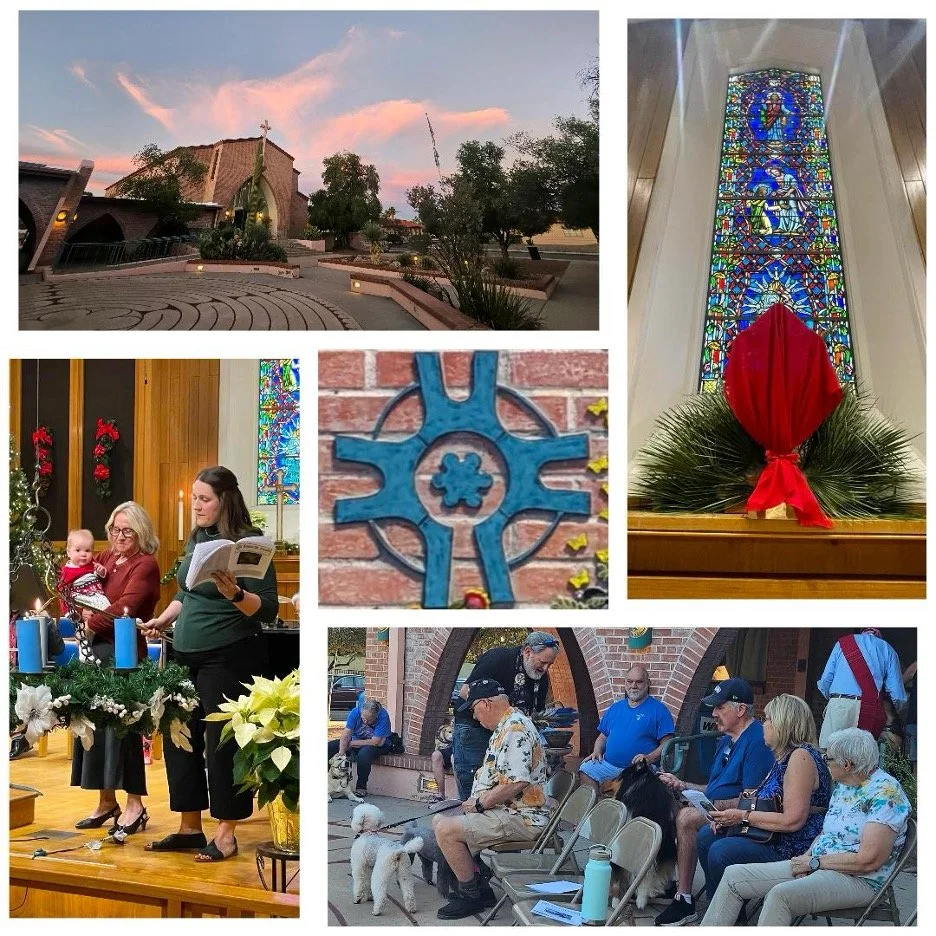
The entrance to Grace St. Paul's, where our mission greets every visitor: Earth Justice — Migrant Justice — Social Justice. This mosaic was designed and hand-crafted by parishioner Patty Rushing.
Grace St. Paul's Episcopal Church Parish Profile Tucson, Arizona
Contents: 1. History | 2. Worship Style & Staffing | Developing a Meaningful Liturgy by Committee | Staffing | 3. Community Outreach & Ministries | 4. Financial Health
5. Description of Surrounding Neighborhood | 6. Benefits, Amenities, & Quality of Life | 7. Hopes, Dreams, & Vision for the Future | View Parish Profile PDF
1. History of the Parish
The history of Grace St. Paul’s begins in 1882 with the founding of Grace Church, one of the first Episcopal churches in Arizona. The first services were held in the Pima County Courthouse, then in a schoolhouse and private residences. Two successive church buildings were built and used in downtown Tucson until the mid-twentieth century. Then, between 1951 and 1958, a rectory, parish house, undercroft, offices and sanctuary were completed on the “east side of town” in the current location on Adams Street. The meeting to form the brand-new Diocese of Arizona was held in the new sanctuary on February 4, 1959.
St. Paul’s Church grew out of the University community and its Student Center, established in the 1930s in the garage of a prominent Episcopal woman in the community. The formation of an Episcopal campus ministry for the students eventually led that community to become a new parish. St. Paul’s completed a building adjacent to the campus in 1959 on East Speedway. Due in part to exponential growth in Tucson in the 1940s through the 1970s, both Grace and St. Paul’s parishes thrived just 12 blocks apart, at times stretching both facilities to capacity.
By the late 1980s, circumstances called both congregations toward something new. Grace’s membership had grown older, while St. Pauls’ building was materially affected by the widening of Speedway Boulevard. Yet both parishes shared a commitment to fine music and work in social justice issues, and joined in a landmark merger. On the eve of Palm Sunday in 1991, St. Paul’s deconsecrated the building on Speedway, and the next day the merger was marked with a procession down the street to Grace’s property. By all accounts, this was a great idea, and Grace St. Paul’s has since become a well-known progressive presence in Tucson and the Diocese of Arizona..
1992 - 2008 brought the leadership of The Rev. Dr. Gordon McBride, last rector of St. Paul’s, became the first rector of Grace St. Paul’s. Under his tenure, the parish sold the St. Paul’s building and established a contingency reserve fund of over $700,000. There were many successes under McBride, such as visits of Marcus Borg, John Dominic Crossan, John Phillip Newall and the Right Reverend John Shelby Spong; the popularity of the contemplative contemporary service music of Kristopher Lindquist; myriad social ministries; unique, innovative liturgies (approved by successive bishops from that point through today); support of women, minorities, and LGBT issues and persons; and the continuation of a popular Thursday-night intimate service. But an aging building and a period of flagging attendance meant rapid use of the endowment, though successful stewardship efforts in subsequent years largely addressed this.
2008 - present has been shaped by the leadership of The Rev. Steve Keplinger, called in September 2010 to be the second rector of Grace St. Paul’s. His appreciation for the unique liturgies and social outreach were strong draws for him, and he led the parish into further explorations of those strengths. With a complement of exceptional support staff and clergy, Fr. Steve has led the congregation through seasons of growth and loss, capital investment and renewal, celebration and conflict. Throughout, the parish has deepened its identity around its three-pillared mission: Earth Justice - Migrant Justice - Social Justice.
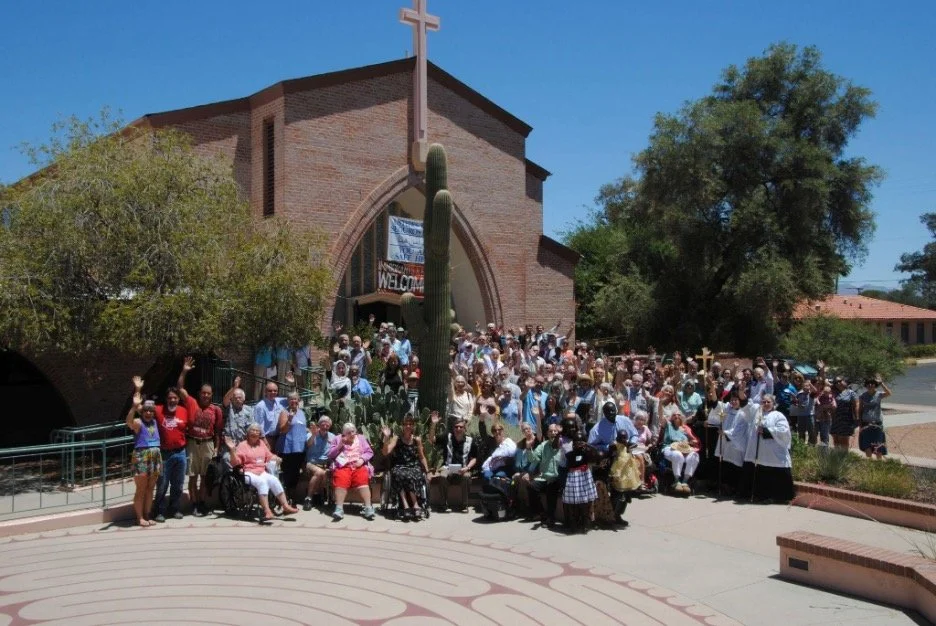
GSP congregation in front of the church with our labyrinth in the foreground.
Grace St. Pauls was both resilient and creative and actually thrived during the COVID pandemic, maintaining and expanding our strong online presence through weekly emails, livestreamed worship services, web updates, and active social media engagement, mostly via Facebook. The congregation enters this season of transition with renewed energy and a clear sense of purpose.
A note on a current legal matter: a small number of neighbors (but notably not the entire neighborhood association by any means) have filed an initially anonymous lawsuit related to our parish’s social justice and outreach ministries. Yet, we are recognized and respected throughout the community for this work, and we have the support of the Diocese of Arizona, the Episcopal Church (ECUSA), and experienced local legal expertise, and we are hopeful for a resolution prior to the calling of our next rector.
2. Worship Style and Staffing
Worship
Grace St. Paul's offers a liturgically rich and spiritually diverse worship life that holds traditional Episcopal practice in creative tension with innovation and contemporary relevance. The parish offers a main service on Sundays at 10:00 a.m. that features experimental progressive liturgy complemented by a varied and vibrant music ministry, spanning choral, instrumental, gospel, traditional, and contemporary expressions, which parishioners consistently describe as central to their experience of worship. The 10:00 a.m. service is anchored by two beautiful pipe organs, harpsichord, and grand piano, and regularly showcases the gifts of both amateur and professional musicians from within and beyond the congregation.
A more intimate service is offered on Sundays at 7:45 am. This service blends traditional Book of Common Prayer liturgy (Rite II) with progressive elements for those who prefer a more contemplative experience.
Across both services, selected music, readings, announcements, and prayers are often in Spanish. A large portion of the congregation - while not necessarily hispanic - are bilingual, or partially so. This is not surprising, as Southern Arizona was part of Mexico until 1854, and continues to be shaped by our Mexican traditions, culture, and language that are woven into the fabric of daily life and worship at Grace St. Paul’s.
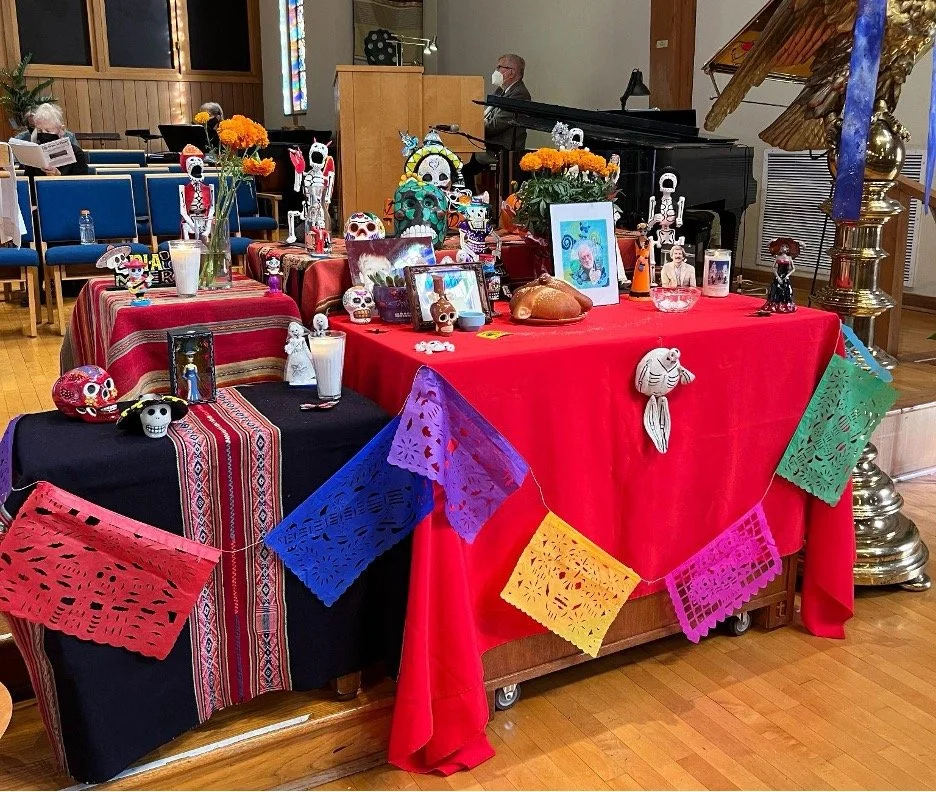
At Grace St. Paul's, All Saints Day and Día de los Muertos are honored together – one of many ways we honor and embrace the Mexican heritage that is woven into the fabric of Southern Arizona. A colorful ofrenda invites parishioners to bring photos of loved ones who have gone before us, joining remembrance and joy in a practice as ancient as it is beautiful.
Preaching at GSP is known for being intellectually rigorous, theologically progressive, and unafraid to engage honestly with social and political realities of our time through the lens of the Gospel. The liturgical calendar is observed with intention and creativity. Holy Week, Christmas Eve, and the Season of Creation are cited as particularly meaningful expressions of our community's faith and values.
Beginning in 2011, the parish has annually observed the Season of Creation from the first Sunday in October until Advent. This liturgical season celebrates the sacredness of the cosmos, featuring specialized worship services, music, custom visual sets and videos, and themes honoring wilderness and environmental justice. Sunday services during the Season of Creation typically open with a solitary native flute played by one of our parishioners, followed by an acclamation that acknowledges our place within Creation and sets the tone for the liturgy. The chancel and sanctuary are adorned with cosmos-themed linens, and representations of the sun, earth, and moon hang from the ceiling.
Open communion is practiced at Grace St. Paul’s, and all are welcome at the table – no exceptions.
Smaller worship and formation communities extend the parish’s spiritual life throughout the week, including:
● A Centering Prayer group,
● Spirit Now – an interfaith contemplative community open to all seekers, a place of healing, forgiveness, and spiritual exploration across traditions. Weekly gatherings, including a monthly Taizé service, engage the Spirit through dialogue, meditation, and music.
● Loving Kindness Meditation - a Wednesday evening Zoom meditation group
● GSP Today is a weekly Monday noon Zoom gathering where parishioners join Fr. Steve for informal conversation about faith, life, the Sunday sermon, and whatever else is on their minds.
● Virtual Adult Education - An offering of 203 online classes, prepared by parishioner Charles E. Dickson, Ph.D.
● Education for Ministry (EFM), a four-year theological study and reflection program
● Episcopal 101, a popular six-week introduction to the Episcopal tradition, particularly for those exploring confirmation
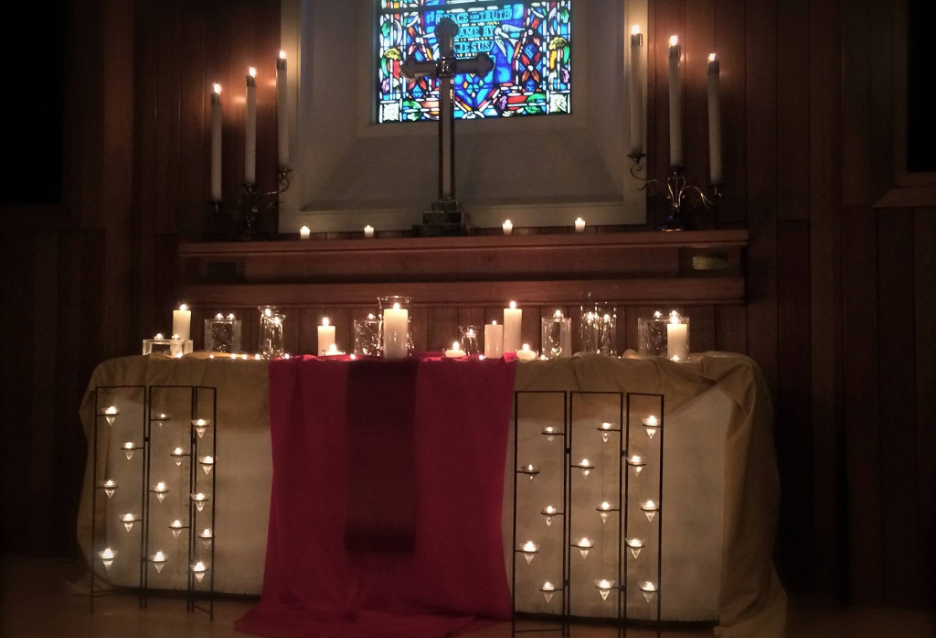
Dozens of candles transform the Grace St. Paul's chancel into a sanctuary of stillness during one of our monthly Taizé services — an evening of contemplative prayer, chant, and silence open to all.
Online worship, maintained and expanded since the pandemic, continues to extend GSP's reach beyond its physical campus. Approximately 25-50 connections participate in the online service each week - the term “connections” acknowledging that couples and families often share a single online connection. Regular online participants include friends and family of local parishioners from across the United States and around the world, members whose own local parishes don’t meet their spiritual needs, and parishioners who are homebound or experiencing long-term illness. For many, this connection is a lifeline.
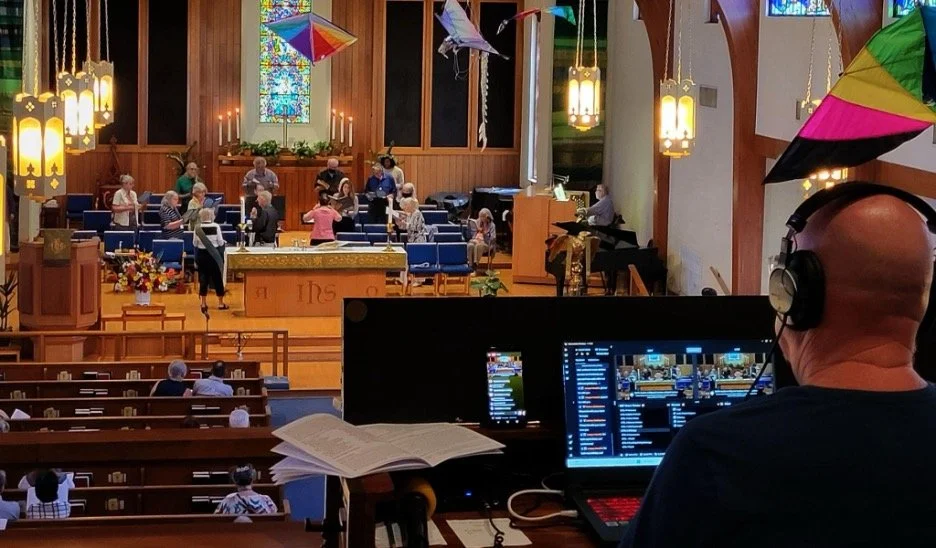
Parishioner Bruce Anderson sets up and tests livestream software during choir rehearsal ahead of the 10:00 a.m. Sunday service.
Developing a Meaningful Liturgy by Committee
The GSP community understands liturgy as a living expression of faith rather than a fixed text to be recited. We are a living church,a living expression of the Body of Christ, and our worship seeks to give voice and expression to this truth. Though our liturgy is consistently rooted in Episcopal tradition and follows the Rite II outline, we understand the word "may" in that outline as an invitation to choose something different that is both creative and relevant.
For a progressive congregation like ours, whose identity is built around radical inclusion, social justice, and progressive theology, a purely traditional service might feel misaligned with who we understand ourselves to be. Liturgy at GSP is a form of witness, a way of embodying our values, not just proclaiming them. We believe worship should feel participatory, authentic, and connected to the realities of contemporary life, not as a departure from tradition but as its living extension.
On Sundays, the 7:45 a.m. service aligns with the BCP and supplemental approved resources. The 10:00 a.m. service follows the same basic structure but is more experimental: collects and prayers are adjusted or replaced to bring the liturgy into the present moment drawing on resources from across the Anglican Communion, other denominations and contemporary spiritual writers.
When music of many genres, non-scriptural readings (what we call "Continuing revelations of God"), contemplative practices (e.g., Taizé and centering prayer), and seasonally resonant themes come together (e.g., Season of Creation), the result is a worship experience that seeks to be genuinely transformative – one that speaks both to the gathered community as a whole and to each person within it, wherever they are in their spiritual journey. Each service is an invitation to “go forth into the world” in whatever way resonates most deeply. There is beauty in that, worthy of great respect.
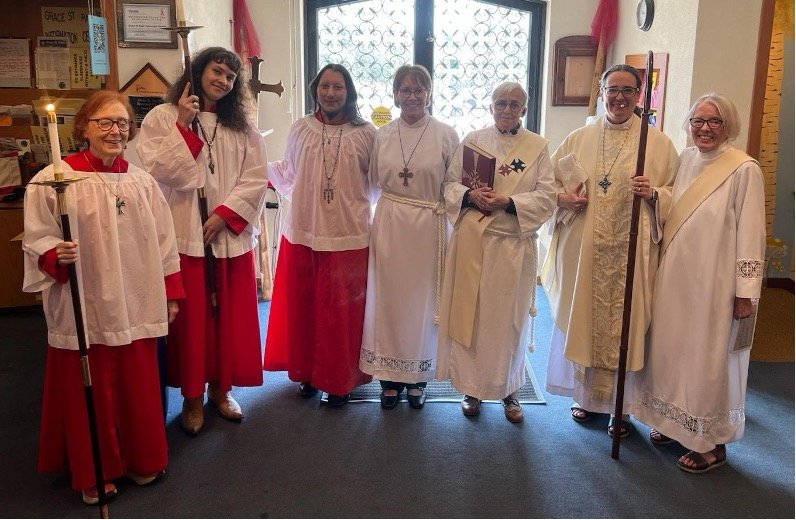
Acolytes and Deacons with Bishop Jennifer Reddall in the Narthex prior to a Sunday service.
A favorite word of our Liturgy Committee is “adapt.” Among our adaptations:
● The congregation joins in in speaking the words of institution: This practice embodies our theology that the Eucharist belongs to the whole Body of Christ, not solely to ordained clergy. Having the priest alone consecrate the elements is hierarchically at odds with our values while congregational recitation transforms the congregation from passive observers of a priestly act into active participants. It is a communal act, and this practice gives voice to that truth for this parish.
● The ordained clergy are served communion last: Aligning with the values previously stated, disabled congregants who cannot approach the communion stations are served communion first, followed by the rest of the congregation, and finally the clergy. This practice reinforces the principle that the priest isn’t doing something for us, but with us. It echoes the processional where the Cross is first and the clergy are last.
● References to the second coming are removed: Our mystery of faith does not conclude with “Christ will come again” and instead states “Christ fills all creation!” We are not a community focused on a future arrival, but on recognizing the presence of the risen Christ among us in our worship, our work, and one another.
● We remove the word 'Lord' as much as possible: "Lord" is a feudal and patriarchal term rooted in medieval European social structures that masculinizes God and carries the weight of colonial Christianity in which lordship was used to justify dominance over the marginalized. As our theology of God evolves away from an all-powerful figure in the sky, and toward a recognition of the Divine present in all of creation, this language no longer serves us.
● Many hymns and psalms have been thoughtfully redacted: Beginning in the 1980s, we began revising lyrics that express theological perspectives at odds with our evolving understanding of God. Atonement theology (we absolutely do not believe that Jesus died to atone for our sins), exclusively male imagery for God, and archaic language (e.g. “thee”, “wouldst”) have all been revisited in the interest of worshiping with honesty, integrity, and inclusivity.
● The Nicene Creed is almost always replaced with an Affirmation of Faith at the 10:00 Sunday service: This replacement invites honest, intentional engagement with what we actually believe, rather than defaulting to inherited language that may or may not reflect our lived faith. The affirmation is crafted or selected to resonate with the readings and themes of a particular service, and avoids the patriarchal and hierarchical assumptions embedded in the Creed’s original language
The existence of our Liturgy Committee - especially one that is inclusive with people from different experiences and faith backgrounds - is itself an adaptation, and is unusual in most Episcopal congregations. The rector refers to the BCP for format, and to the lectionary for readings, and then researches various liturgical resources to make modifications (e.g. the format for the Prayers of the People is from the BCP, but then each week they are adjusted to reflect current issues from all over the world). At the weekly meeting, the Liturgy Committee reviews the draft of the service bulletin. Questions are posed and alternatives are suggested, there is discussion, and then the liturgy is modified or adapted when consensus is reached. The new rector of GSP will be expected and invited to work with this Committee as a creative and theological partner.
Staffing
Grace St. Paul's has long been a place where vocations take shape. Over the years a striking number of parishioners have entered discernment here and gone on to ordained ministry, and we have come to see this as one of the more telling things about our common life: something about the way we worship, argue, serve, and take one another seriously seems to surface calls that might otherwise have gone unexamined. We are also fortunate in the clergy who find their way to us in retirement. Tucson draws them, and a parish with our theological commitments keeps them, so we are blessed with an unusual depth of ordained wisdom in the pews and at the altar. This is both a gift and a responsibility. It means we have real capacity for supply, teaching, and pastoral support, and it means we are formed by people who know the work from the inside. We hope our next rector will find in this an asset, and will help us continue to be a parish where people discover what God is asking of them.
The Rev. Steve Keplinger, Rector
The Rev. Gary Cyr, Associate Rector, and Director of Social Justice in Action*
The Rev. Lynn Marie Hunter, Interfaith Minister
The Rev. Donald Eager, Deacon
The Rev. Nancy Meister, Deacon
The Rev. Kym Kennedy, Deacon
The Rev. Joe Fitzgerald, Priest Associate
The Rev. Larry Weeks, Priest Associate
The Rev. Allan Breckenridge, Priest Associate
*Retired Sept 2026, for health reasons
(Jennifer Reddall, Bishop of Arizona)
Ricky Salas, Parish Administrator
Christina Jarvis, Music Director
Jared Aragón, Keyboardist
Kim Braun, Associate Keyboardist
Amelia Tay, Director of Children, Youth and Family Ministries
Argelia El-Kahyat, Nursery Worker
James White, Sexton
Tom Schact, Assistant Sexton
Benjamin Cannon, Bookkeeper
CHILDREN AND YOUTH SPIRITUAL FORMATION LEADERS
Amelia Tay, Director
Elizabeth Pullen, Young Adult Facilitator
Ellen Caldwell, Nursery Volunteer
Andrew Lewis
Madeleine Caldwell
Maria Ramirez
Mary Prasciunas
Max Forton
Philip Johnson, Senior Warden
Martha Whitaker, Chair of the Rector Search Committee
Steve Merski, Junior Warden
Paul Hetland, Treasurer
Rob Rauh, Chancellor
Margaret Scott, Clerk of the Vestry
3. Community Outreach and Ministries
Grace St. Paul's understands justice not as a program but a calling, lived out through three interconnected pillars: migrant justice, social justice, and earth justice. These commitments are not aspirational; they are lived out through active, hands-on ministries that are woven into the daily life of the parish.
Current outreach efforts include:
● Joseph's Pantry and Café: A food ministry serving community members in need, widely and consistently cited by parishioners as one of their greatest sources of pride and purpose.
○ Bread for the Pantry: A bread ministry providing fresh bread to those in need.
● Shower Ministry — providing hygiene services for unhoused neighbors
● Migrant Ministry — including accompanying migrants to bus and air transportation, providing overnight presence for safety, coordinating housing support, informal opportunities for English and Spanish language learning, and collaborating with other Tucson faith communities
● Pastoral Care — including care for the dying and their loved ones, with parishioners sharing deeply moving accounts of clergy presence during end-of-life moments. This ministry also includes Home Communion, i.e. bringing the Eucharist to parishioners who are homebound or hospitalized.
● Activism and Advocacy — parishioners participate in community organizing, including anti-ICE protests/vigils and other social justice actions, reflecting the congregation's conviction that faith demands public witness
● Education for Ministry— a four year theological study and reflection program, helping parishioners to find and prepare for their chosen ministry
● Episcopal 101— a popular six week class for those new to the Episcopal tradition, especially those considering confirmation
● Interfaith and collaborative activities
○ Tucson Interfaith HIV AIDS Network (TIHAN)
○ Primavera
○ Tucson LGBT Chamber of Commerce
○ Good Neighbor Interfaith Coalition
○ Various music organizations in the community
4. Financial Health
Grace St. Paul's operates with an annual budget of approximately $750,000, which has remained relatively stable over recent years with modest year-to-year variation. The parish holds approximately $900,000 in endowment funds, the majority of which are restricted for designated purposes, along with approximately $200,000 in unrestricted investment funds.
Congregational giving is broadly distributed across the congregation rather than concentrated among a small number of major donors (see Figure 1 below). This is a profile that reflects both financial resilience and the demographic shift that Episcopal congregations have experienced over the past half-century, moving from a predominantly affluent membership to a more economically diverse community. That said, giving has been relatively flat in recent years, prompting the vestry to commission a parishioner working group to develop strategies for strengthening stewardship.
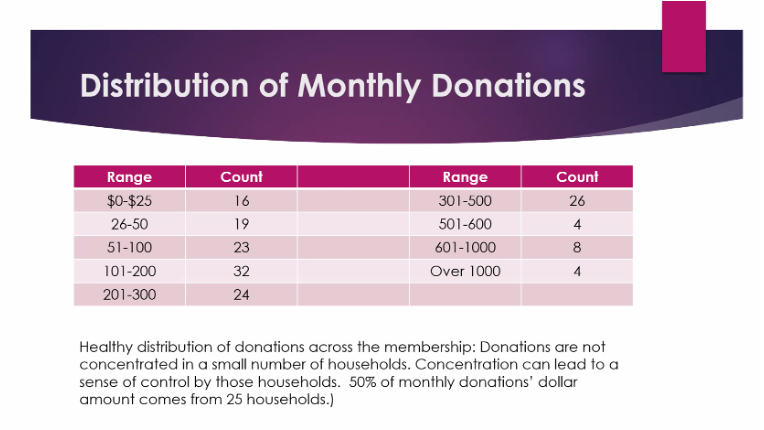
Figure 1. Distribution of monthly donations among GSP parishioners.
The parish's facilities are aging, and capital needs are significant. In recent years, GSP successfully completed a major roof replacement (over $150,000, covered entirely by insurance) and expanded columbarium capacity through capital expenditure, with costs to be offset as units are purchased. Remaining priorities include kitchen upgrades, plumbing repairs, and improvements to the rectory, parish hall, and meeting rooms. Much of this work is being carried out by a dedicated group of volunteers, though a comprehensive capital fund plan and campaign will be needed to address the full scope of need. The parish is also navigating an ongoing legal matter that may result in significant legal fees; however, these are being offset by pro bono representation, insurance coverage, and diocesan support.
Grace St. Paul's operates with an annual budget of approximately $750,000, which has remained relatively stable over the past several years with modest year-to-year variation. Looking ahead, GSP's financial strengths rest on its broad and committed base of contributors. Key challenges include an over-reliance on regular annual giving and the need to cultivate planned giving through major gifts, bequests, and a more intentional grant-seeking program — areas the parish is actively working to address. Additionally, current national economic uncertainty may affect parishioners' capacity and confidence in giving, adding a layer of financial unpredictability in the near term.
While in-person Average Sunday Attendance(ASA) has not yet fully recovered to pre-pandemic levels (see figure below), the congregation has shown encouraging and consistent participation since 2021. Online participation adds a meaningful dimension to congregational engagement not captured in traditional attendance figures, and the budget has remained stable. GSP enters this season of transition with momentum and a renewed sense of community.
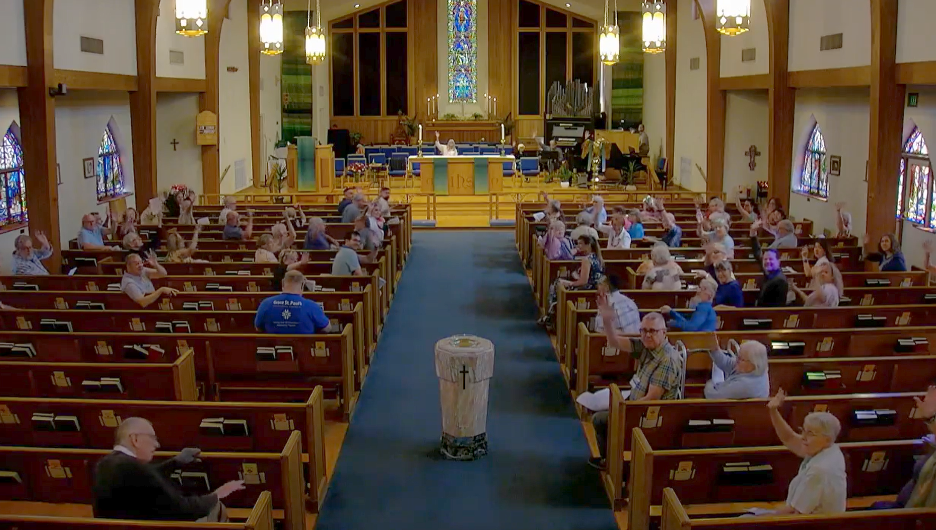
To ensure our online participants feel as welcome and engaged as possible, the congregation is invited to turn and wave to our online members before each 10:00 a.m. Sunday service.
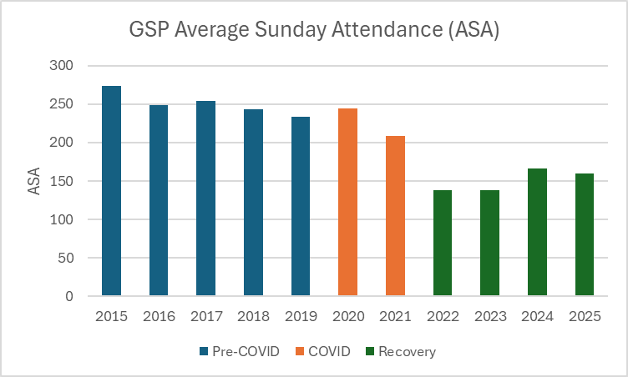
Figure 2. GSP Average Sunday attendance since 2015, color coded by pre- and post-COVID pandemic. This graph does not yet illustrate our online attendance that started in 2020.
5. Description of the Surrounding Neighborhood
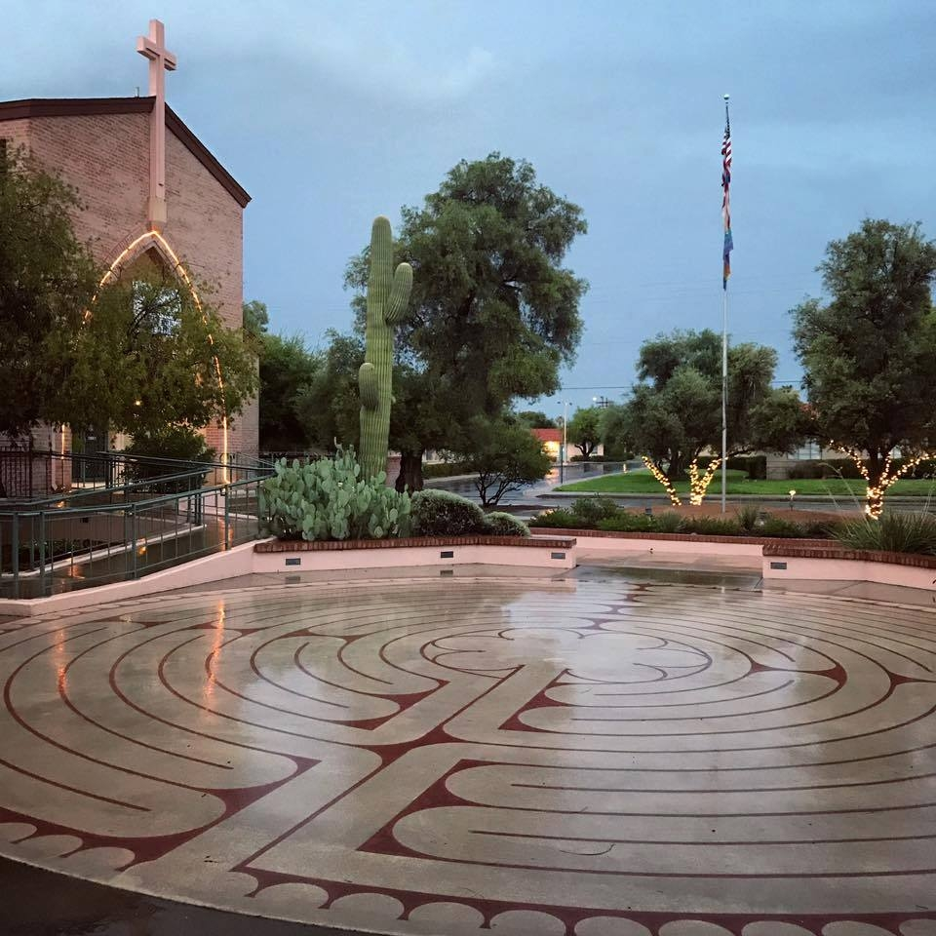
Grace St. Paul’s church, campus, and rectory are located in the Blenman-Elm Historic District in central Tucson. Established in the 1920s, the neighborhood is made up mostly of historic single-family homes, ranging from bungalows to larger estates. It is adjacent to the University of Arizona, about three miles from downtown, and within walking distance of coffee shops, parks, restaurants, several elementary schools, the historic Arizona Inn and Banner University Medical Center.
The Blenman-Elm Historic District is often described as a “living mosaic” of Tucson’s past and present—combining historic charm, architectural significance, and an active, welcoming community. The neighborhood attracts a mix of residents, including families, professionals, university faculty, some university students, and retirees.
Tucson Unified School District serves the area surrounding GPS’s campus and rectory. TUSD is the oldest and largest school district in Southern Arizona, serving more than 47,000 students. Within walking distance of GSP are three elementary schools: one private Catholic school, one charter school, and one public elementary school. Arizona state law also allows families to use open enrollment to attend any public district or charter school, regardless of residential boundaries.
Grace St. Paul’s has been part of the Blenman-Elm neighborhood since 1952, when the rectory was purchased. The current church building followed in 1959 as Grace Church, prior to its merger in 1991.
The campus is both meaningful and beautiful, and parishioners are committed to its care and long-term sustainability. It reflects our values of Earth justice through shaded parking with solar panels and EV charging stations. The grounds also include memorial gardens both for people and their companion animals.
Our relationship with the neighborhood has generally been positive. While a small group of neighbors has opposed our social justice ministries—resulting in litigation related to our work with the unhoused—many others actively support the church through volunteering and donations.
6. Benefits, Amenities, and Quality of Life
Tucson and Southern Arizona:
Tucson is a vibrant, culturally rich city of just over one million people in the Sonoran Desert of Southern Arizona. It is home to the University of Arizona; a thriving arts scene; world-class hiking and outdoor recreation; and a deep multicultural heritage shaped by Indigenous, Spanish, Mexican, and Anglo traditions. The city enjoys more than 300 days of sunshine per year, a relatively low cost of living compared to other major metropolitan areas, and a strong and growing food and dining culture. (e.g. In December 2015, Tucson became the first city in the United States to be designated a UNESCO City of Gastronomy, a prestigious award that honors Tucson’s 4,000-year-old agricultural history, rich Sonoran-Mexican culinary heritage, commitment to sustainable desert food systems, and vibrant local food scene.)
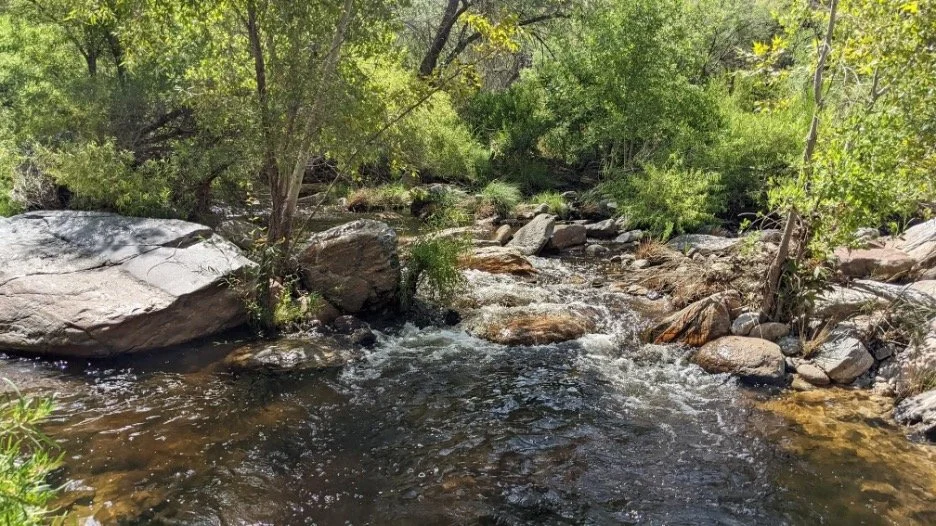
The Sabino Creek runs much of the year, shown here after monsoonal rains.
For a clergy person and their family, Tucson and Southern Arizona offer:
● Affordable housing relative to comparable cities
● A strong interfaith community, with active partnerships among Tucson's religious congregations
● Cultural life—the University of Arizona Museum of Art, the Arizona State Museum, Center for Creative Photography, Tucson Symphony Orchestra, Arizona Opera, The Century Room (one of the premier jazz clubs in the country), and a lively local music scene that embraces all music genres and music groups from all over the world. Tucson also has over 500 public murals, with local art databases tracking roughly 530 to 537 individual painted works across the city Tucson Murals
● Indigenous roots of the Tohono Oʼodham and Pascua Yaqui peoples that are deep and enduring. The area is built on their ancestral lands, and both tribes maintain reservations, community centers, and strong cultural presences in and around the greater Tucson metropolitan area
● Outdoor recreation—Saguaro National Park (east and west), Mount Lemmon and the Santa Catalina Mountains, Sabino Canyon, over 150 hiking trails, premier birding destinations (including Madera and RamseyCanyons, the Chiricahuas, and Whitewater Draw), and an extensive cycling network which boasts over 1,000 miles of dedicated bike lanes, paths, low-traffic routes, El Tour de Tucson, and Cyclovia
● A diverse array of wildlife adapted to desert and mountain habitats, including: javelinas, coyotes, mule deer, bobcats, Gila monsters, roadrunners, rattlesnakes, coatimundi, quail, mountain lions, and Mexican gray wolves
● Many nearby National Historic Landmarks, Parks and Monuments, including: the towns of Bisbee and Tombstone; Tumacácori National Historical Park; Casa Grande Ruins National Monument; and Chiricahua National Monument
● Proximity to Mexico (Nogales is approximately one hour south), offering rich cross-border cultural and ministry connections particularly relevant to GSP's migrant justice work, Southern Arizona shares its history with Spain/Mexico (since 1539) and native tribes (perhaps since 11,000-7500 BCE); the first Anglo-Americans arrived in 1825, and were a minority in the Tucson area until a couple of decades after the purchase of Southern Arizona from Mexico in 1854
● Family-friendly destinations including the Arizona-Sonora Desert Museum, Children’s Museum, and Reid Park Zoo plus over 180 city and county parks
● A thriving astronomy community, uniquely combining top-tier academic research, cutting-edge aerospace industry, and a passionate amateur scene. Nicknamed the "Astronomy Capital of the World," Tucson boasts famously dark skies
● Signature events including the world-renowned Tucson Gem & Mineral Show, the western-themed Tucson Rodeo (La Fiesta de los Vaqueros), the food-filled Tucson Meet Yourself, the awe-inspiring All Souls Procession, and the Tucson Festival of Books (a premier, free-to-attend, family-friendly celebration of literature)
Tucson, Arizona, is frequently rated as one of the best places to live, retire, and visit in the U.S. The BBC rated Tucson #7 in their list of 25 top travel destinations for 2025; Condé Nast recognized Tucson’s historic Barrio Viejo neighborhood as one of the most exciting places to go, largely drawing attention to the city's booming food scene; and Outside Magazine selected Tucson as a top global travel destination, highly recommending it for outdoor lovers, adventure seekers, and astronomy tourism.
More information can be found in the Visit Tucson Official Travel Guide.
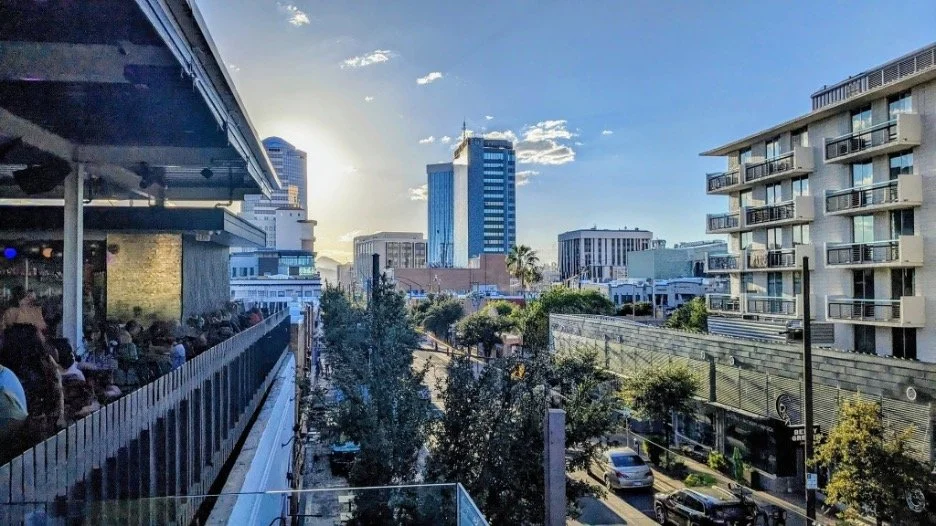
Downtown Tucson has experienced reinvigoration and growth over the past 30 years, including a trolley linking downtown to the University of Arizona.

Tucson boasts nearly 600 murals by over 200 artists throughout the city. Joe Pagac’s Flying Whales near downtown Tucson was among the first. Photo: Kim Braun
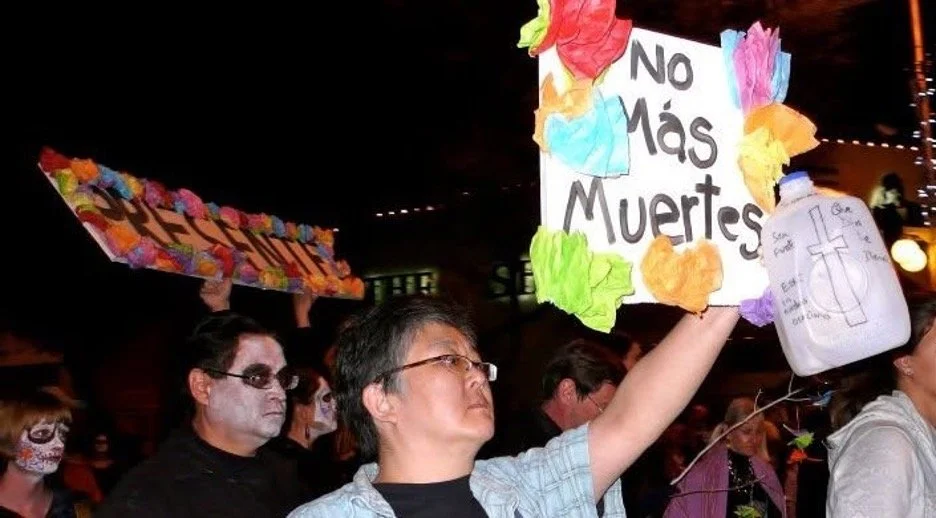
The All Souls Procession. El Día de los Muertos began in 1990 and is officially known as the All Souls Procession.Members of the community often bring to mind immigrant border deaths.
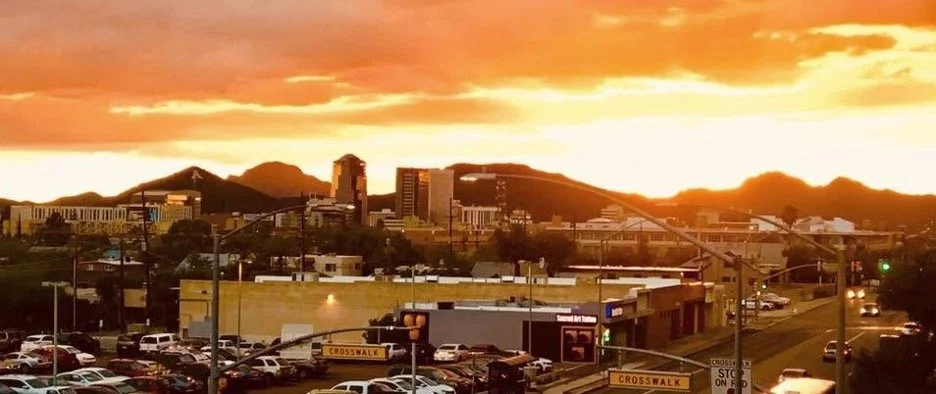
‘A’ Mountain, as seen from the University of Arizona Campus Photo: Martha Whitaker
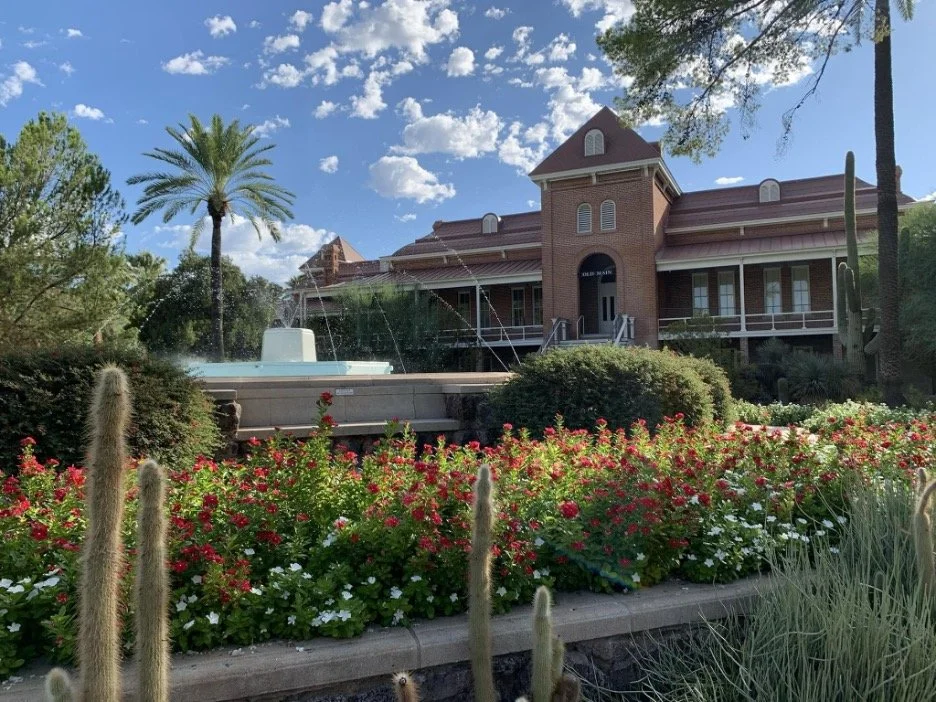
The University of Arizona, established 1891, was the first university in the Arizona territory, and is an integral and prominent cultural part of the Tucson community. Photo: Martha Whitaker
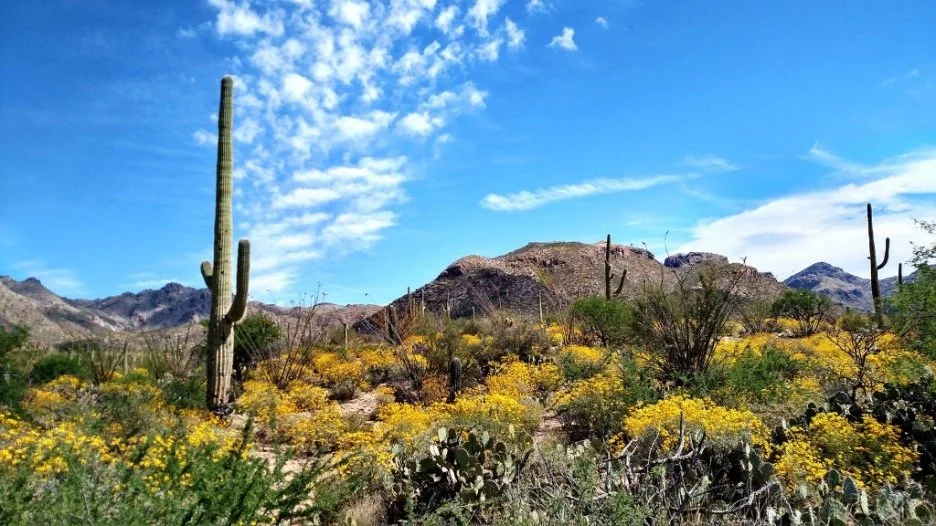
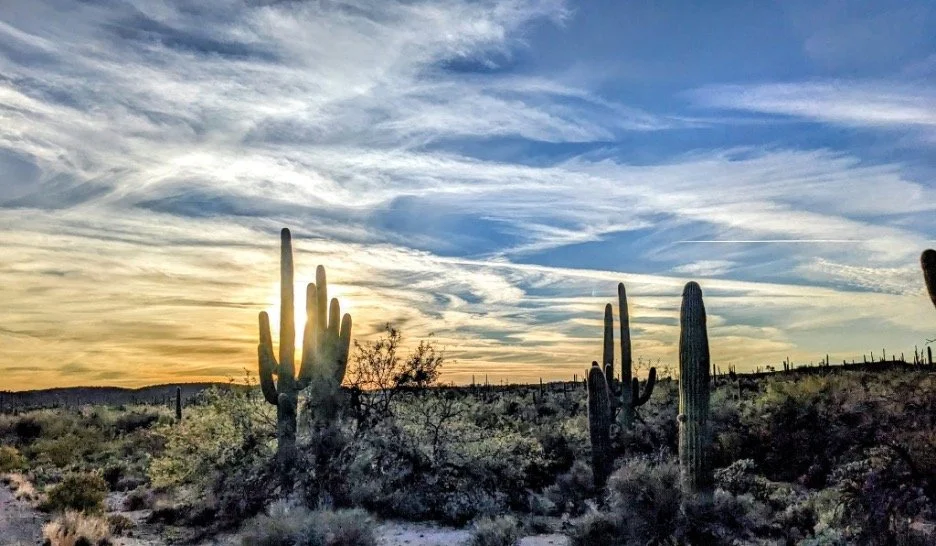
Saguaro National Park covers 92,000 acres split into two distinct districts east and west of Tucson. Established as a national park in 1994, it protects giant saguaro cacti, rugged desert mountains, and rich Sonoran Desert biodiversity across more than 170 miles of trails.
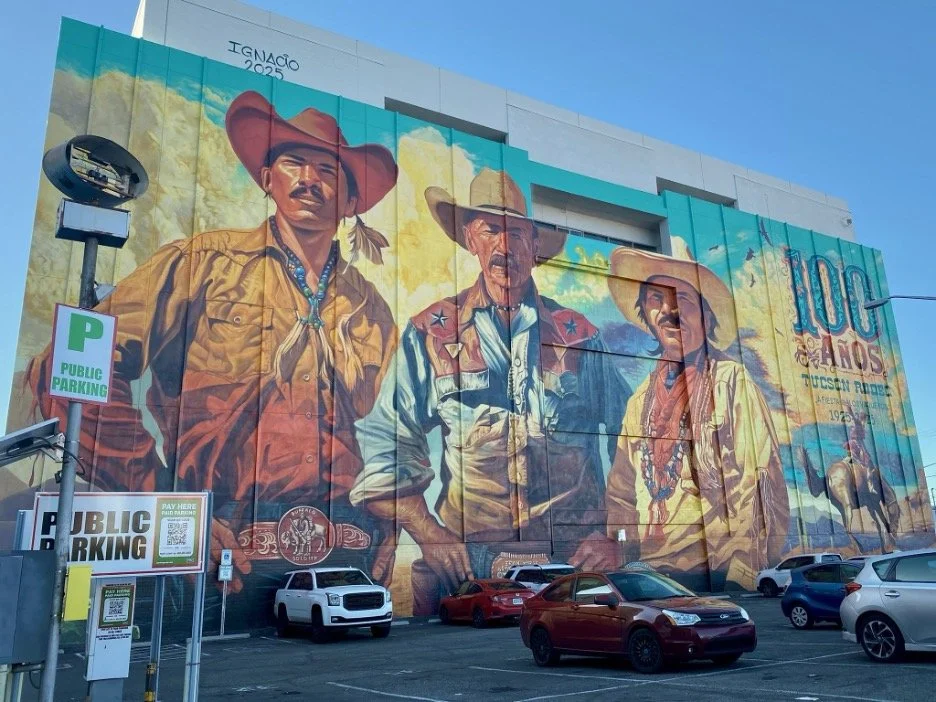
The Tucson Rodeo, or La Fiesta de los Vaqueros, is a massive, multi-day Western event held every February at the Tucson Rodeo Grounds. Dating back to 1925, it features world-class Professional Rodeo Cowboys Association (PRCA) competitions, Mutton Bustin', and the famous non-motorized Tucson Rodeo Parade. Note: This is another Pagac mural. Photo: Kim Braun
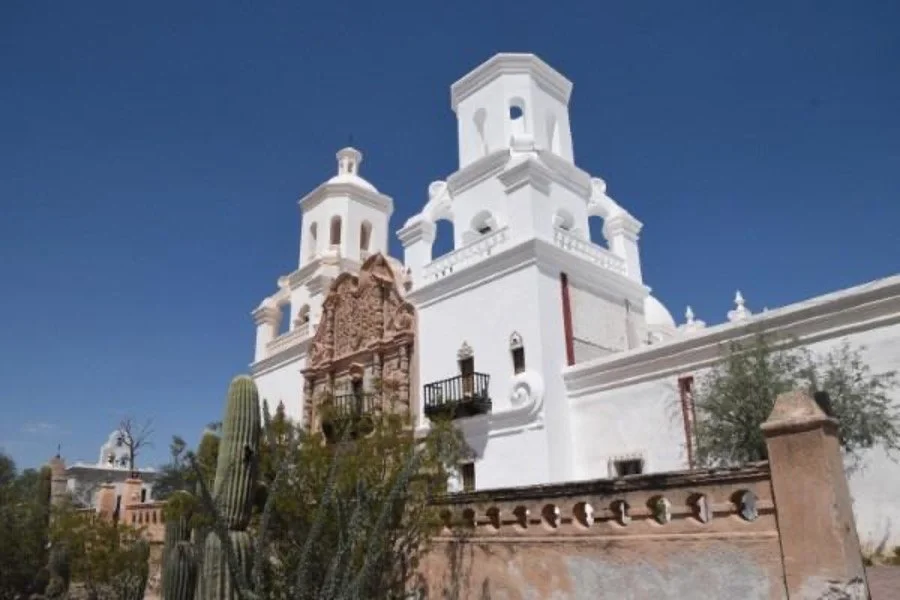
Known as the "White Dove of the Desert," Mission San Xavier del Bac is Arizona's oldest European structure. Built between 1783 and 1797, it serves the Tohono O'odham Nation in Tucson. Famous for its Spanish Colonial architecture and vibrant interior frescoes, it remains an active parish. Photo: John Banks
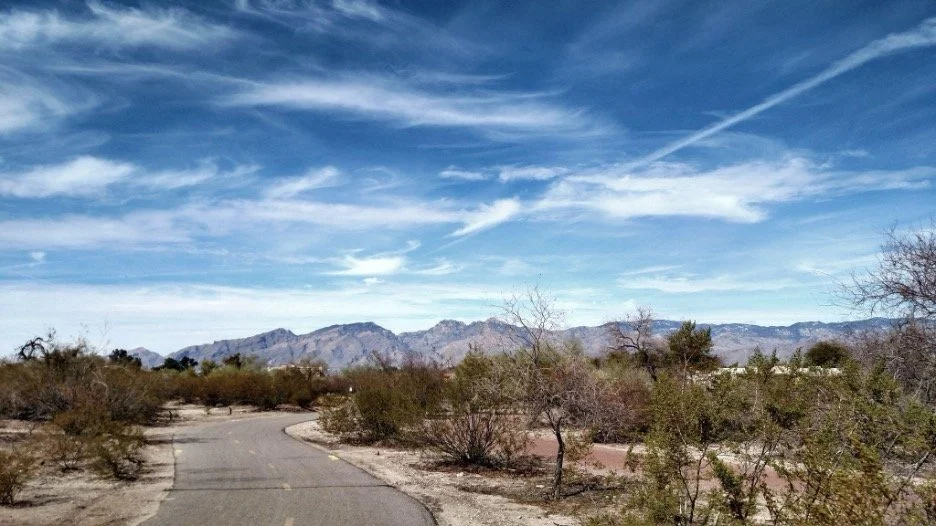
El Tour de Tucson is the largest perimeter bicycling event in America. Held annually the Saturday before Thanksgiving (November 21, 2026), it attracts up to 10,000+ cyclists. Starting and finishing in Downtown Tucson, the event features multiple routes ranging from a 102-mile century ride to family fun rides. Tucson features nearly 140 miles of bike paths—not simply marked off next to roads (although those also are plentiful)—but independent paths winding quietly throughout the desert.
Political climate:
Based on historical and political context, Southern Arizona—often referred to as “Baja Arizona”—is generally considered more politically liberal and progressive compared to the conservative-dominated northern and central parts of the state. Pima County and Tucson are known as Democratic strongholds in an otherwise swing-state (formerly deep-red). Southern Arizona has historically been a hub for progressive, liberal policies, often finding itself at odds with the conservative-dominated legislature in Phoenix. The "Baja Arizona" movement was largely a reaction to the 2010s-era Arizona legislature and its conservative policies.
The rectory of Grace St. Paul’s:
Adjacent to the church and located on church-owned property is a 2,100 sq. ft. rectory. Originally built in 1950, the rectory was refurbished in 2008 and 2009 and includes 3 bedrooms, 2 bathrooms, a living room, kitchen and dining room, as well as a private backyard. A rectory in Southern Arizona provides critical on-site presence, significantly reducing long commute times across the region's expansive geography. It ensures faster emergency responses, fosters deeper community connections, and establishes a secure sanctuary presence that deters vandalism while saving significantly on local housing and rental costs.
Music at Grace St. Paul’s:
Grace St. Paul’s has a reputation for good acoustics and quality music, regularly hosting more than a dozen independent classical performing groups throughout the year and an independent summer concert series. Groups include: the nationally-renowned Candlelight Concerts, Helios Ensemble, St. Andrew’s Bach Society, Tucson Masterworks Chorale, Arizona Early Music, Old Pueblo Brass Band, Arizona Repertory Singers, Sonora Winds, and Desert Voices.
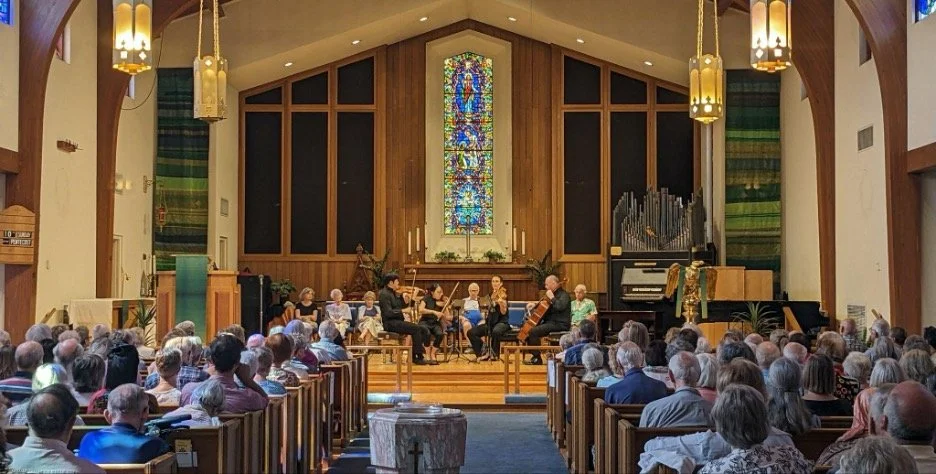
Among the many groups who enjoy the atmosphere and acoustics at GSP is St. Andrew’s Bach Society. Here, SABS brings the internationally recognized Verona Quartet to a packed house, August 30, 2026.
7. Hopes, Dreams, and Vision for the Future
The congregation of Grace St. Paul's enters this season of transition with energy, clarity, and hope. From the congregation’s Day of Discovery, several aspirations emerged with particular consistency:
Growth and Welcome Parishioners deeply desire growth — especially among young adults, children, and families — without sacrificing the intimate, community-centered character that makes GSP feel like home. The congregation wants to be more visible and more accessible, expanding its reach while preserving its soul.
Thriving Ministries The parish hopes to sustain and expand its three pillars of “Migrant justice, Social justice, Earth justice”, and to ensure these ministries are adequately resourced and led for the long term. Parishioners also expressed a desire for expanded pastoral care, more spiritual formation opportunities, and programming offered at times accessible to working adults. Also expansion of music ministries.
A Cared-For Campus There is a shared desire to invest in the physical campus — particularly a fully renovated kitchen meeting county standards, an upgraded McBride Hall, and grounds that reflect the parish's commitment to creation care.
Peace with Neighbors The congregation expressed a sincere desire to strengthen our relationship with the surrounding neighborhood, despite concerns from a small segment of the Blenman-Elm community about GSP’s social services ministries.
Continued Creative Worship Parishioners want to see GSP's liturgical and musical life continue to grow and innovate — remaining rooted in Episcopal tradition while exploring new expressions of worship that connect ancient faith to contemporary life.
A Model for Progressive Christianity Perhaps most broadly, GSP sees itself as a community called to demonstrate that a church can be intellectually honest, radically inclusive, socially engaged, and deeply rooted in the love of Christ — and that these things are not in tension, but inseparable.
We invite you to be part of what comes next.
If the Spirit is moving you toward Tucson and toward this community, we would love to hear from you. Grace St. Paul's is ready — and we are hopeful.